
Dug by hand.
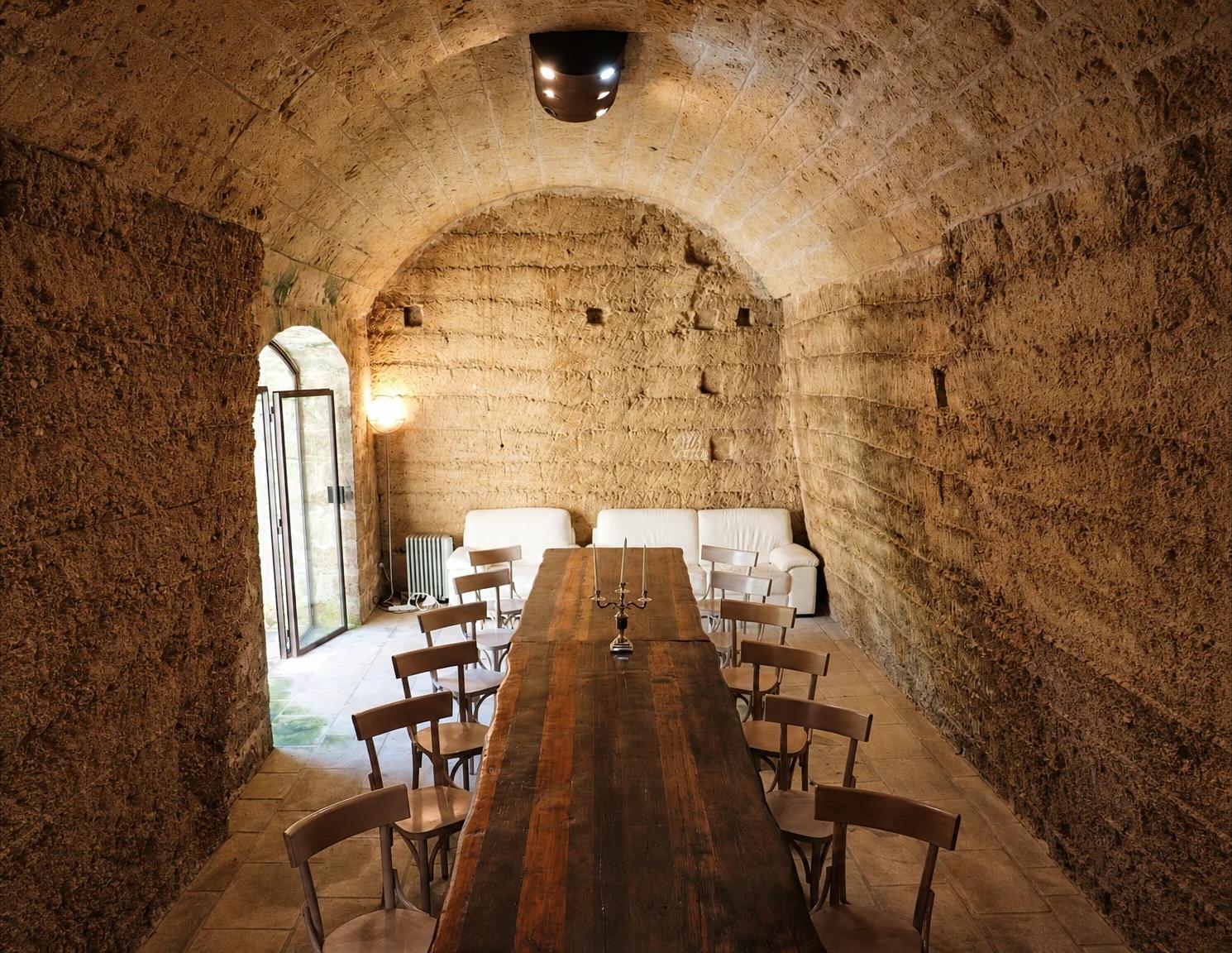
The zoccaturi, the quarrymen of Salento, opened the tufa blow by blow. Every hall beneath your feet was born this way: the Sala Filia, the barrel hall, the Acetaia, the tasting room. Then they were roofed with vaults.
But in Salento, a quarry never stays empty for long…
Above the stone, the wine.
A palmento was built above the quarry, and the quarry became its cistern: the must flowed down to mature in the cool of the rock. As in Salento for centuries, dug-out land was never abandoned. It was reinvented.
And the wine needed a home. It came from very far away…
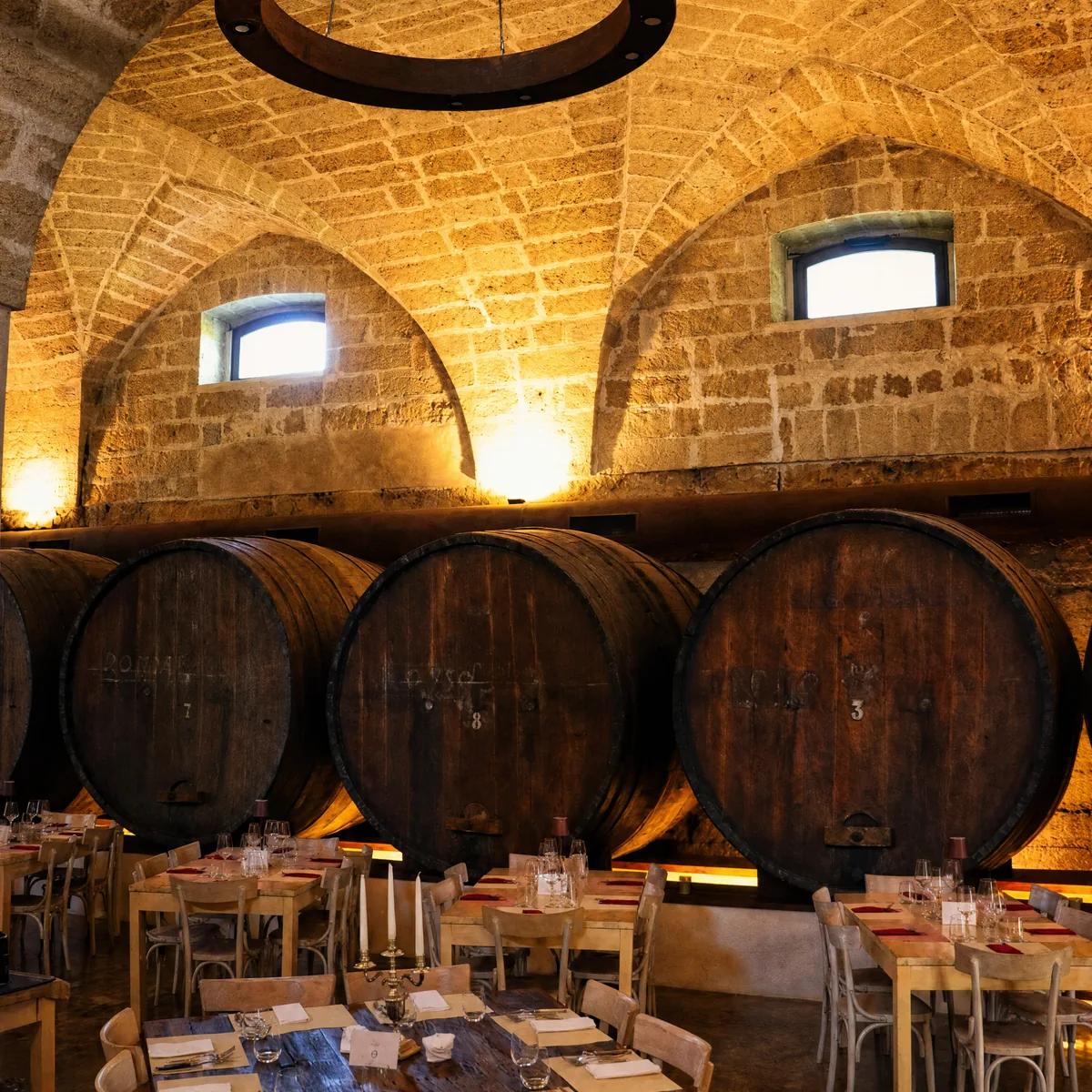
They came by sea.
Canadian oak: barrels built in Canada, shipped across the ocean and reassembled stave by stave. From six to eight thousand litres. They are still here: you see them while you dine.
- 8,000
- litres, the largest
- 1
- ocean crossed
But why a barrel, of all things?
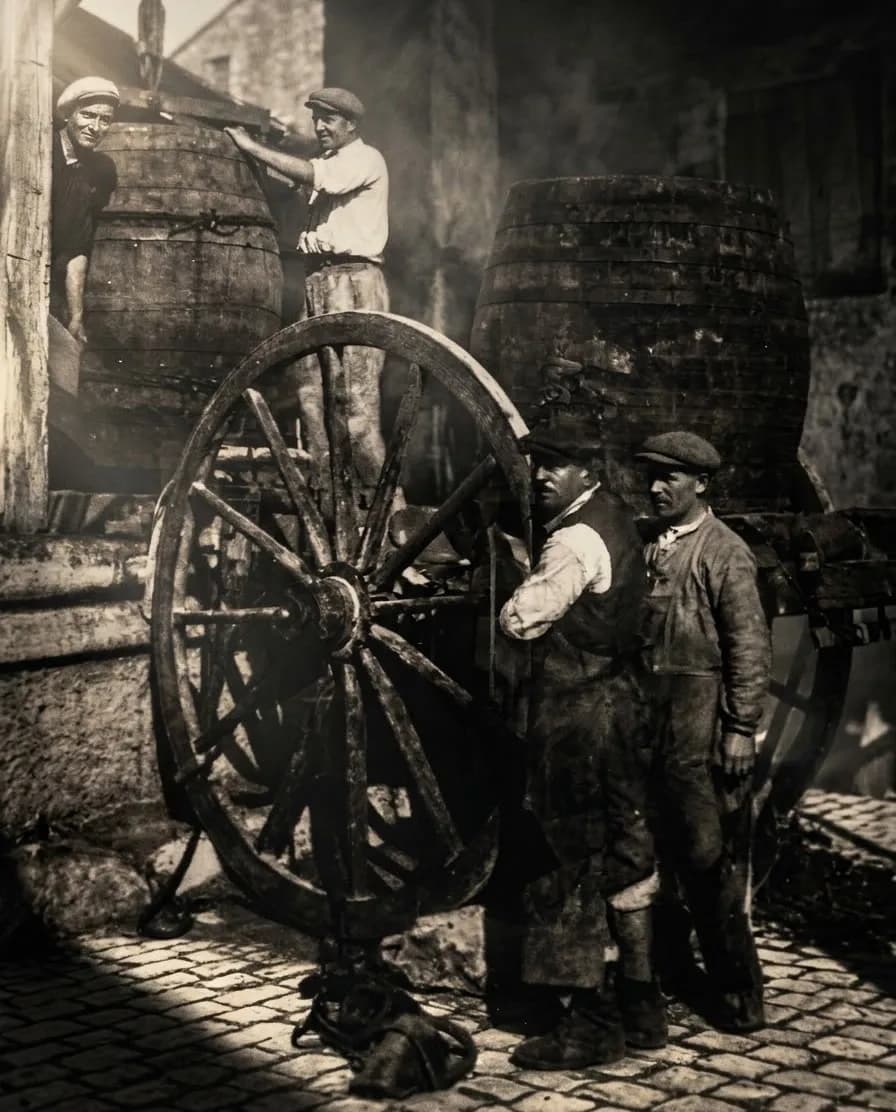
Born to roll.
The barrel was not invented to age wine, but to move it. An amphora had to be lifted, and broke on the carts; a barrel could be rolled. Only with time did people notice that wine improved in the wood.
One enemy remained: the heat of the South…
When light was a luxury.
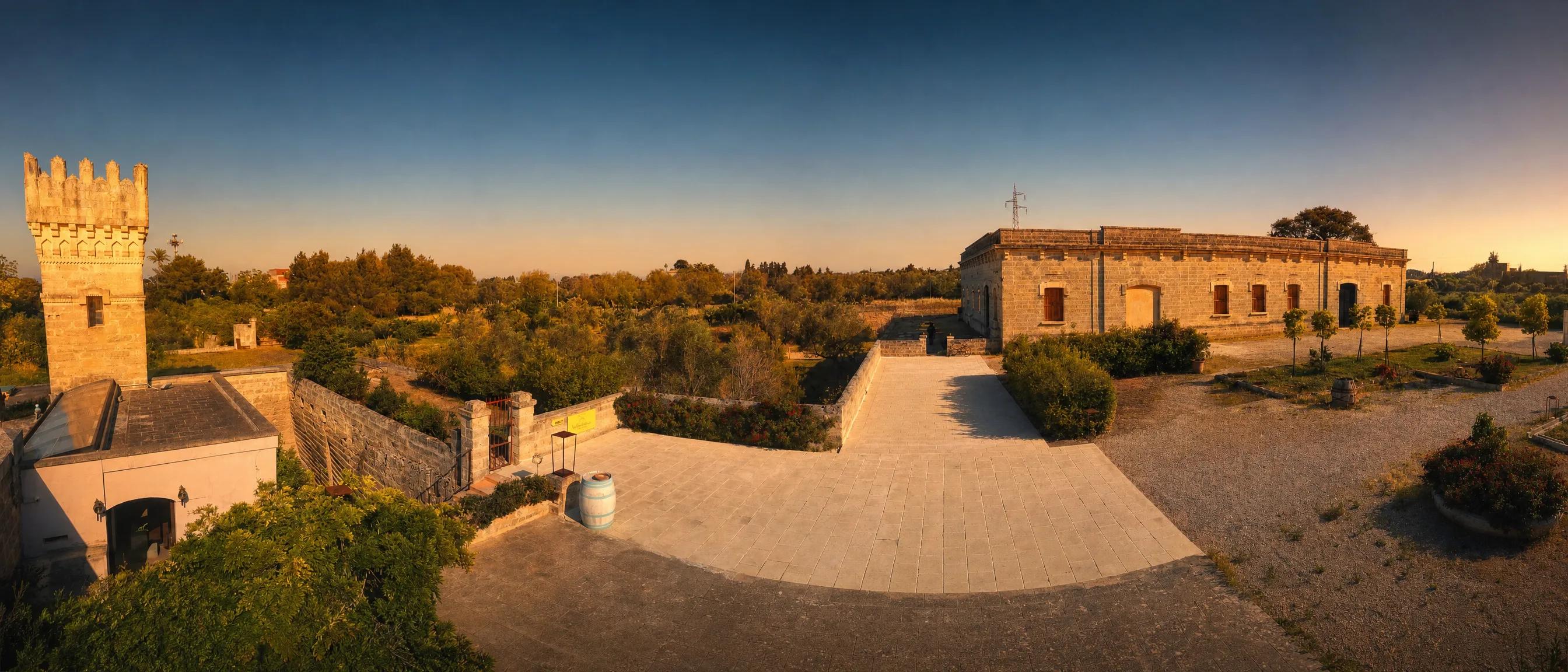
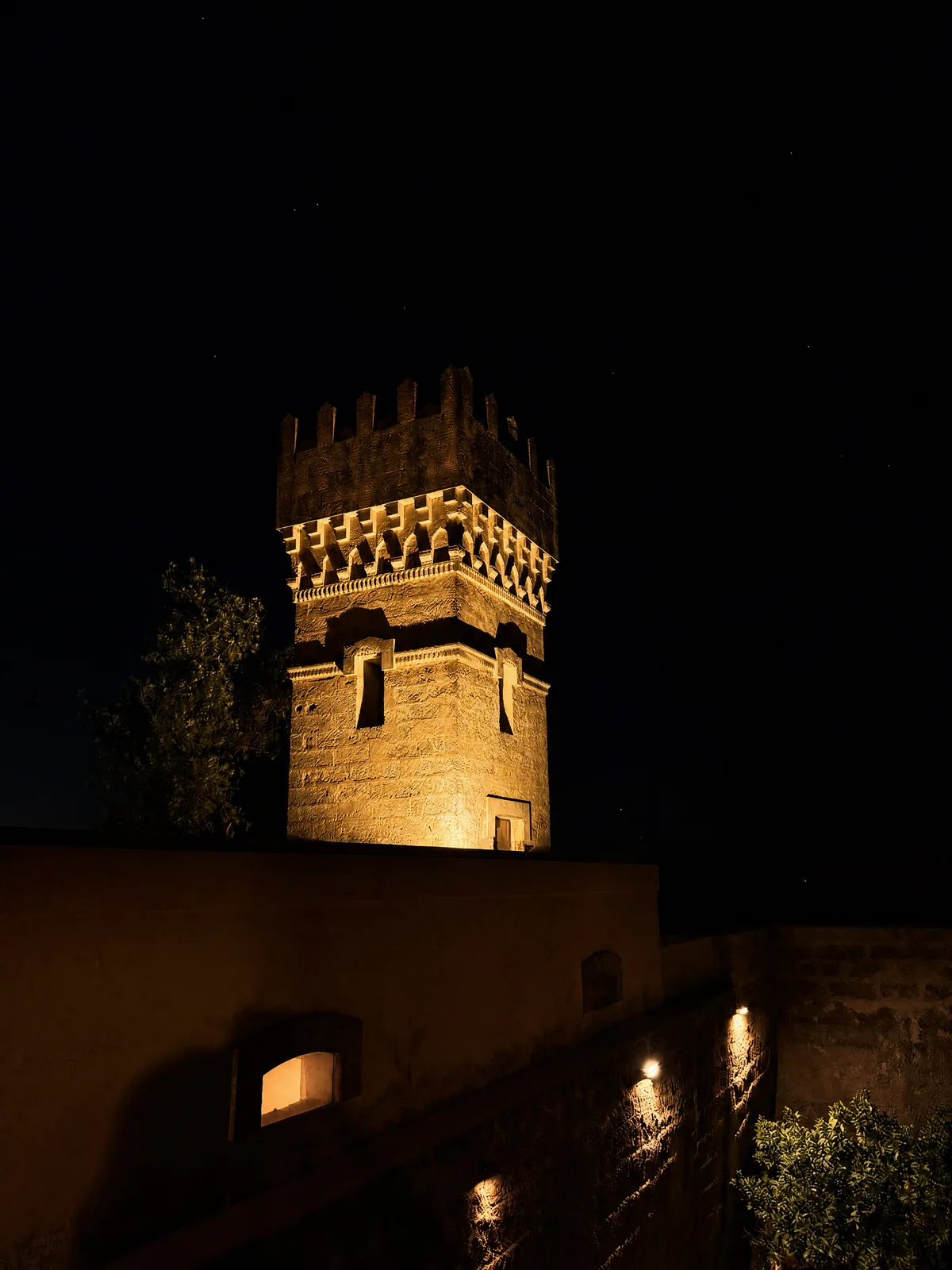
At night, under the bulbs of a generator, the grapes were destemmed and pressed: in the cool, fermentation started slowly and the wine came out finer. The tower, crenellated today, carried water to the whole palmento.
Then, one after another, the lights went out…
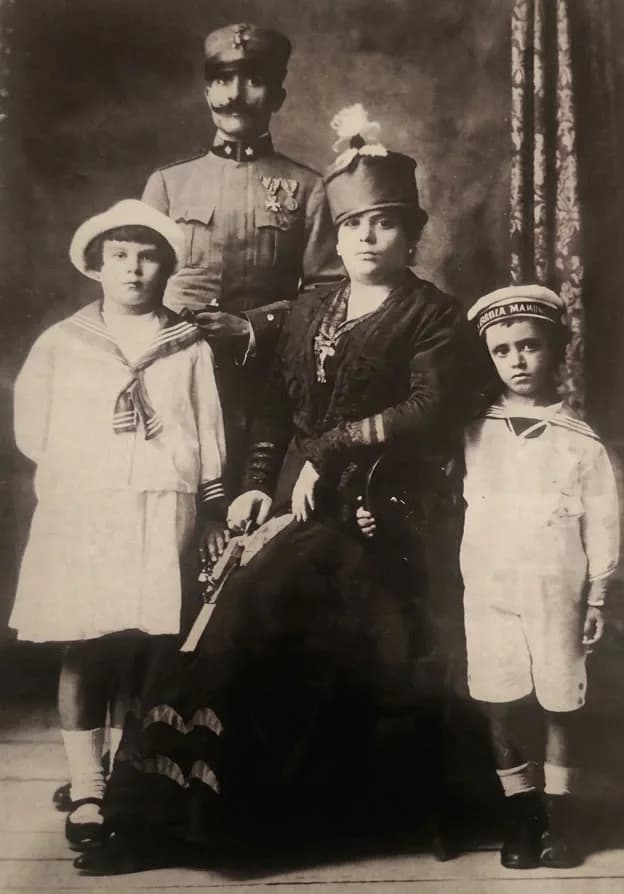
Then, silence.
The wars, the missing hands, the land divided by agrarian reforms. In 1954 the palmento stopped, and from then on only the grapes left. What remained were the barrels, the vaults, the waiting.
Seventy years. Until us…
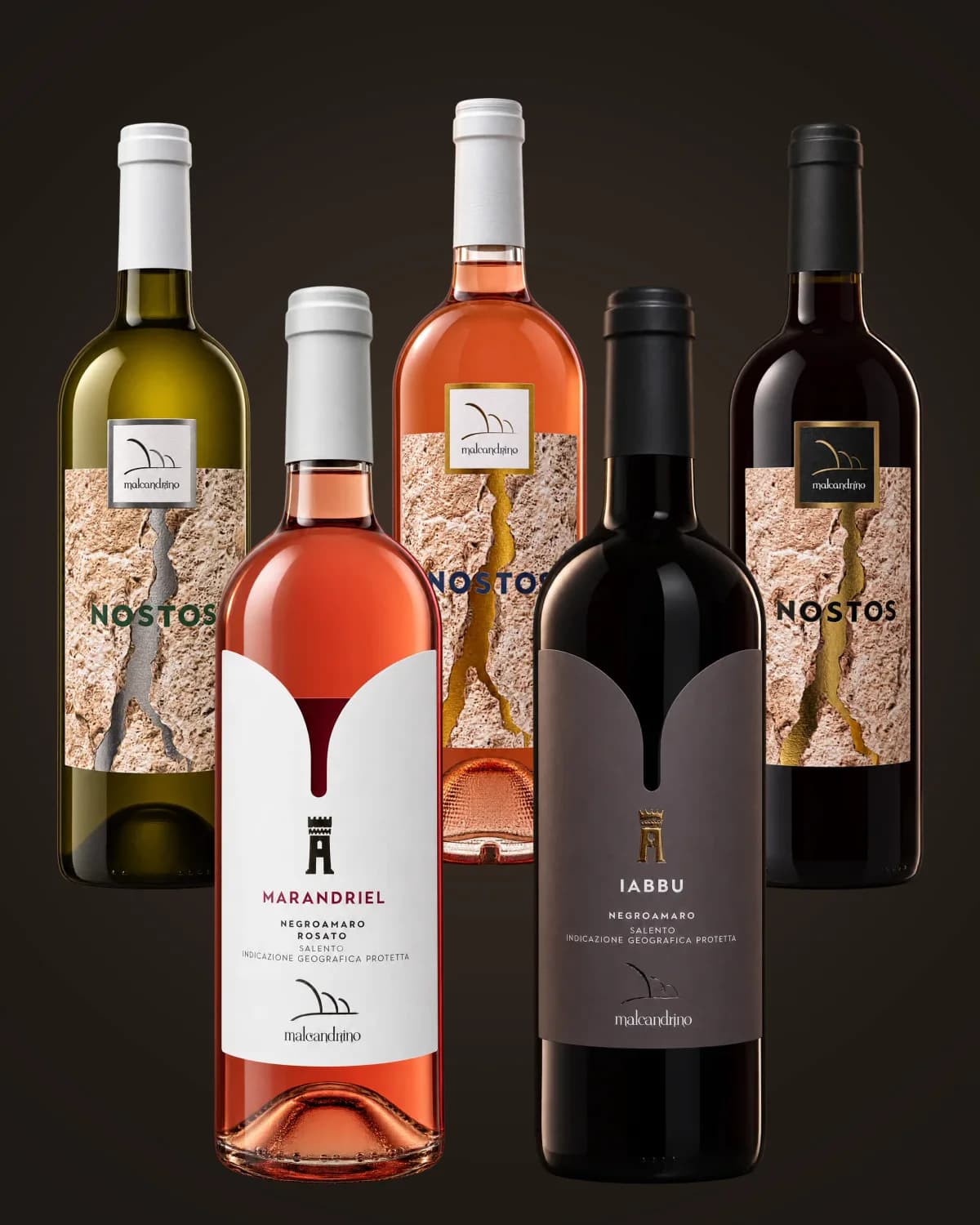
We woke it up. We did not fill it.
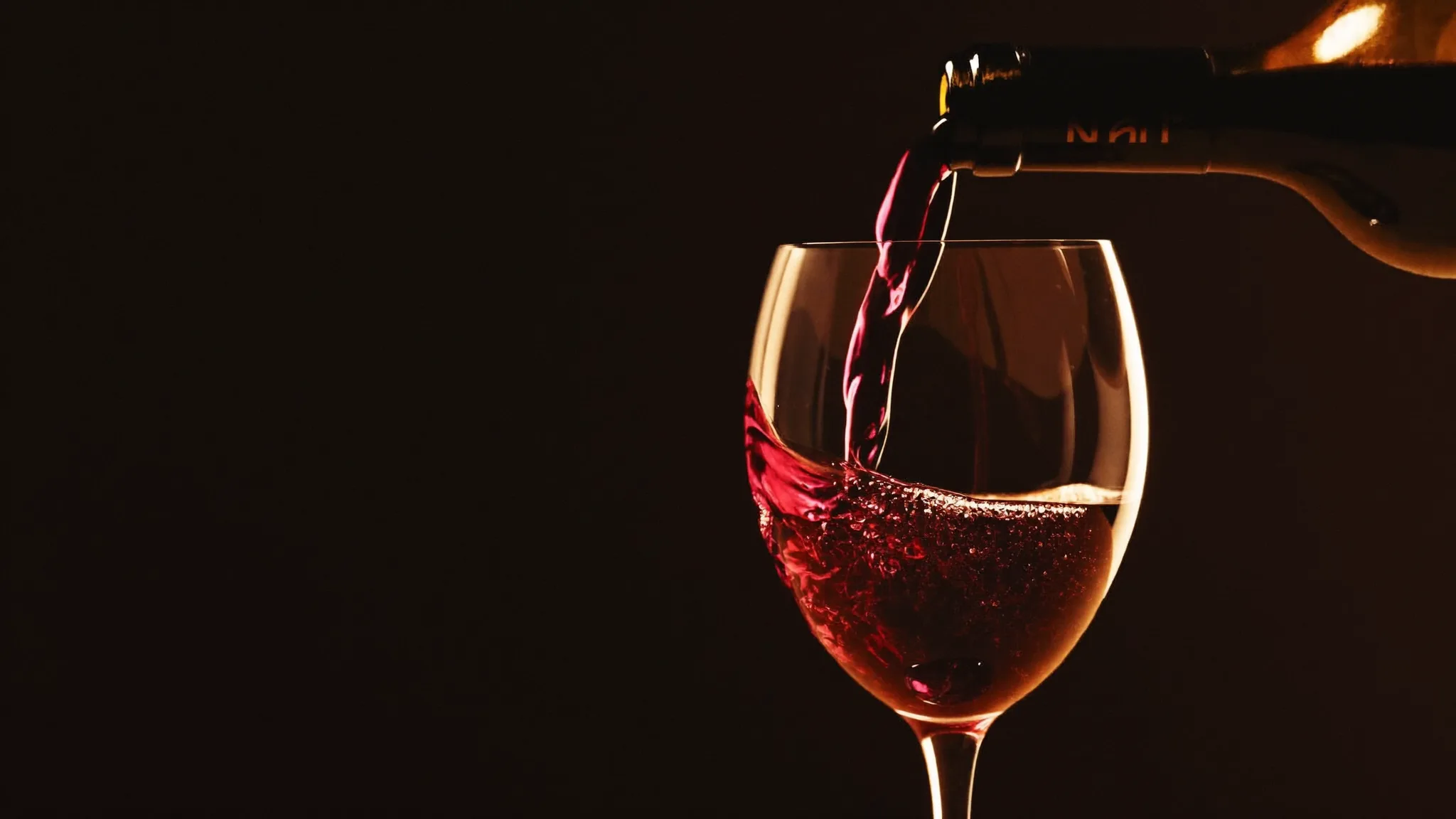
In the last twenty years Salento has gone back to quality wine, rediscovering what was already known here a century ago. The palmento lives again, and the wine is back, under the Malcandrino label.
And there is one last thing done here by going down the stairs…
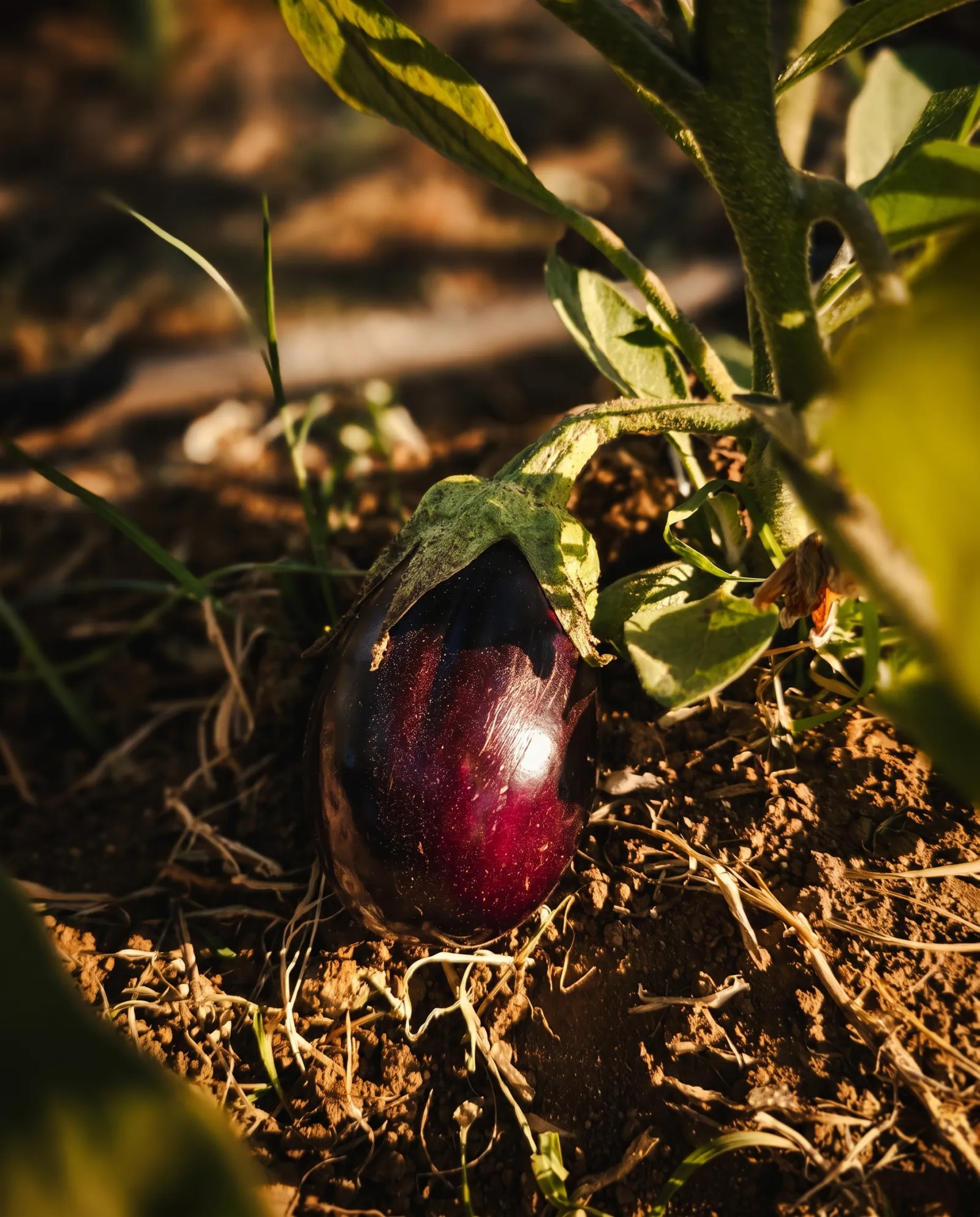
The garden is above. The table is below.
Kilometre minus zero: from the earth to the plate there is no road to travel, you only go down. The same goes for what we make on our farm, from tomato passata to limoncello.
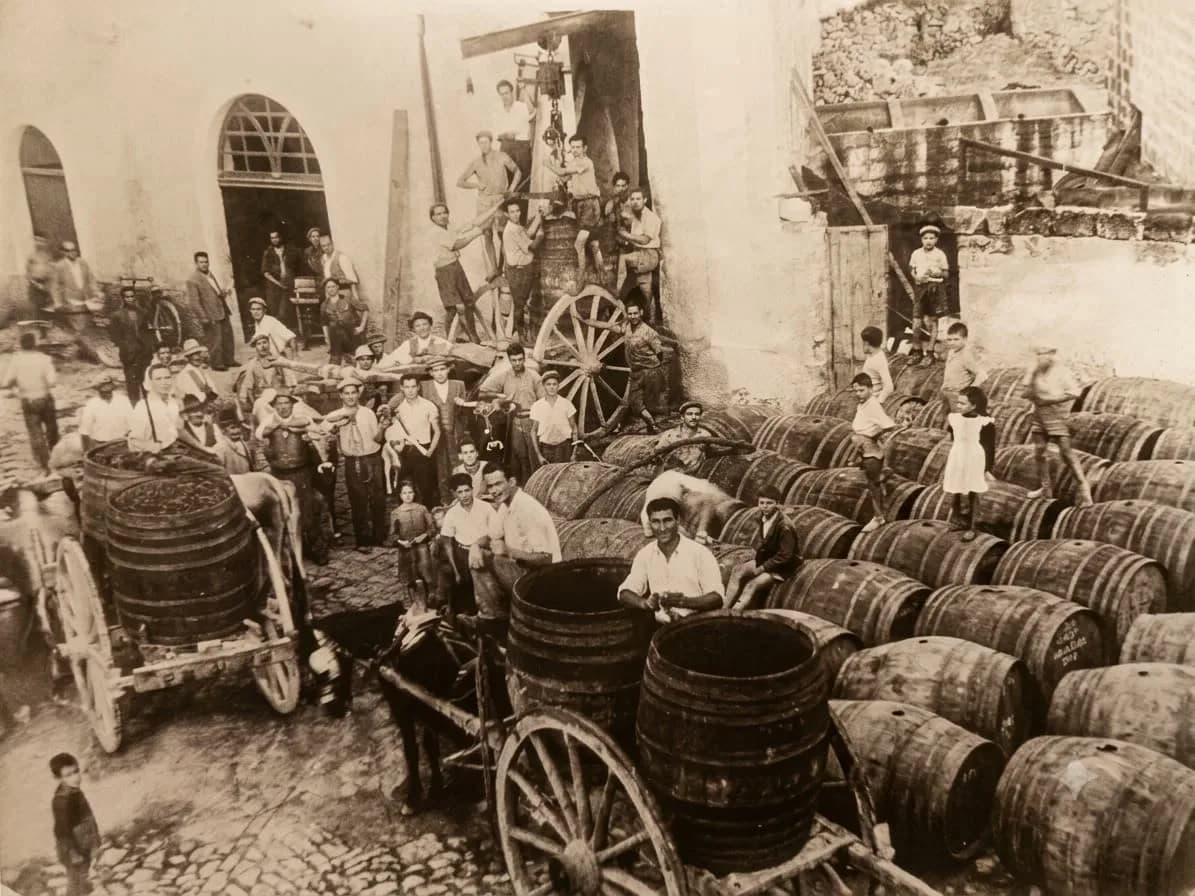
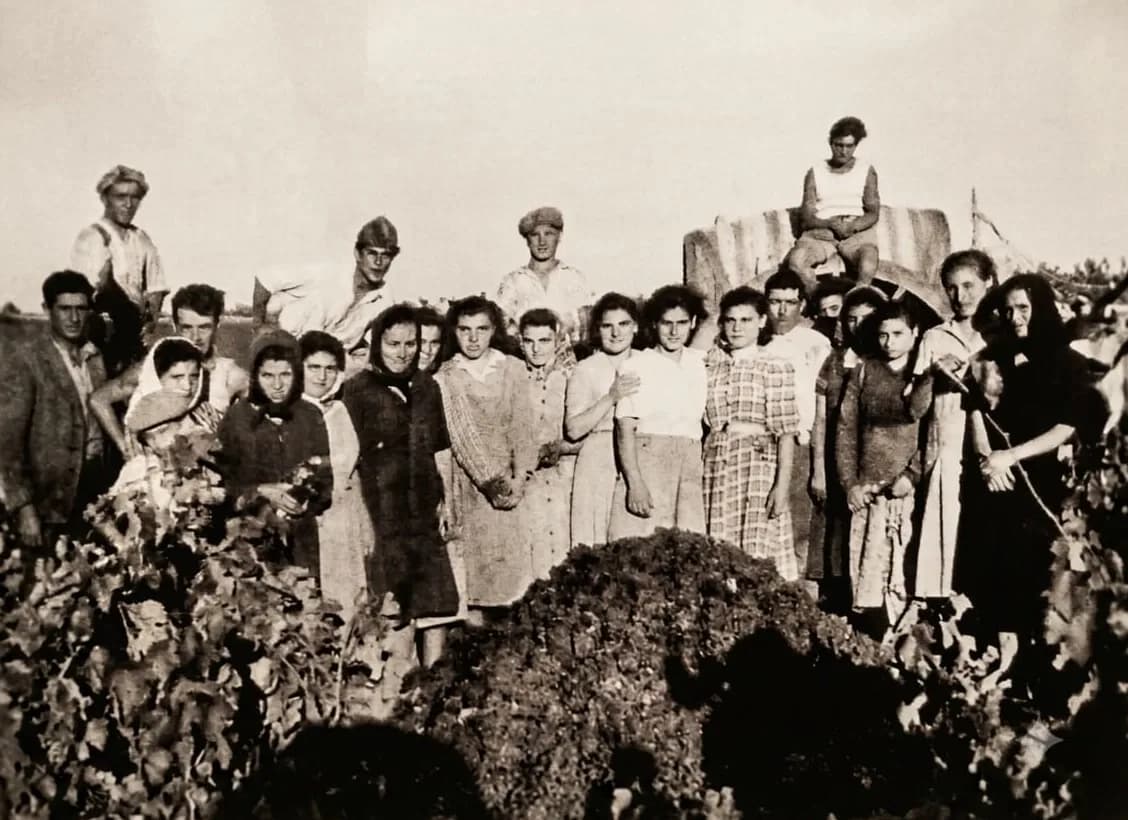
Period photographs, restored.
In the Valle della Cupa, between Lecce and Monteroni, the story of Malcandrino begins underground. In the early nineteenth century the zoccaturi, the quarrymen of Salento, dug the tufa by hand, blow by blow. All of Malcandrino's underground halls were born this way: the Sala Filia, the barrel hall, the Acetaia, the tasting room. Later they were closed by high, silent vaults, and today that is where weddings, parties and events are celebrated.
Here, as for centuries throughout Salento, dug-out land was never abandoned: quarries became cisterns, granaries, underground oil mills. In 1920 a palmento was built above the quarry, and the quarry became its cistern. The must flowed down to mature underground, then rested in Canadian oak barrels of 6,000 to 8,000 litres. They had been built in Canada, shipped across the ocean and reassembled stave by stave in the barrel hall.
It was a modern winery for its time. The harvest began at first light, before the heat of the South arrived. Then, at night, the grapes were destemmed and pressed under the bulbs of a generator that lit the whole building, in years when electric light in the countryside was a rarity. In the cool of the night fermentation started slowly and the wine came out finer: here, already in 1920, the techniques of high-quality wine were known. The tower you see crenellated today was the cistern that carried water to the whole palmento. Like so much Salento wine, the wine born under these vaults took the road to Europe.
Then came the wars. Hands were missing, agrarian reforms divided the land, industry took what had belonged to the fields, and in 1954 the palmento stopped. From then on only the grapes left this land, to be processed elsewhere. With it a craft was lost: for decades Salento produced mostly bulk wine, without a name. What remained were the barrels, the vaults, the silence.
Only in the last twenty years have Apulia and Salento gone back to making quality wine, rediscovering what was already known here a century ago. Malcandrino is this return: to our roots, to our technical skills, to the ingenuity of those who built this palmento. Today the palmento lives again, and with it the wine has returned: the one with the Malcandrino label.
At the table there is traditional Salento cooking at kilometre minus zero. It is our own expression: the garden is above, the kitchen and the dining rooms are below, carved into the stone. From the earth to the plate there is no road to travel, you only go down. The same goes for the products we make on our farm, from tomato passata to limoncello. We are open for lunch and dinner. By reservation we hold tastings in the underground cellar carved into the tufa.
Malcandrino is also the place for your celebrations: weddings, first communions, christenings, graduations, birthdays and company dinners. Every celebration finds its size: the Sala Filia and the barrel hall for large receptions, the Acetaia for more intimate dinners and, in the warm season, the olive garden for larger outdoor parties.
Tradition and
the elegance of simplicity.
Tradition
The recipes of Salento before they were fashionable. Memory handed down through gestures. The time it takes.
The elegance of simplicity
We believe simplicity is the highest form of elegance. Three chosen ingredients, not thirty hidden ones. The dish that does not shout. The gesture you do not see.
Care
Every guest carries a story. Our craft is to welcome it, to keep it, and to give it back at the end of the evening a little richer.